seasonal
Monsoon Scorpion Surge 2026: How to Protect Your Phoenix Home Before the Rains
Phoenix's 2026 monsoon season drives bark scorpions indoors. Here's what we're seeing across the Valley this summer and how to get ahead of the surge.
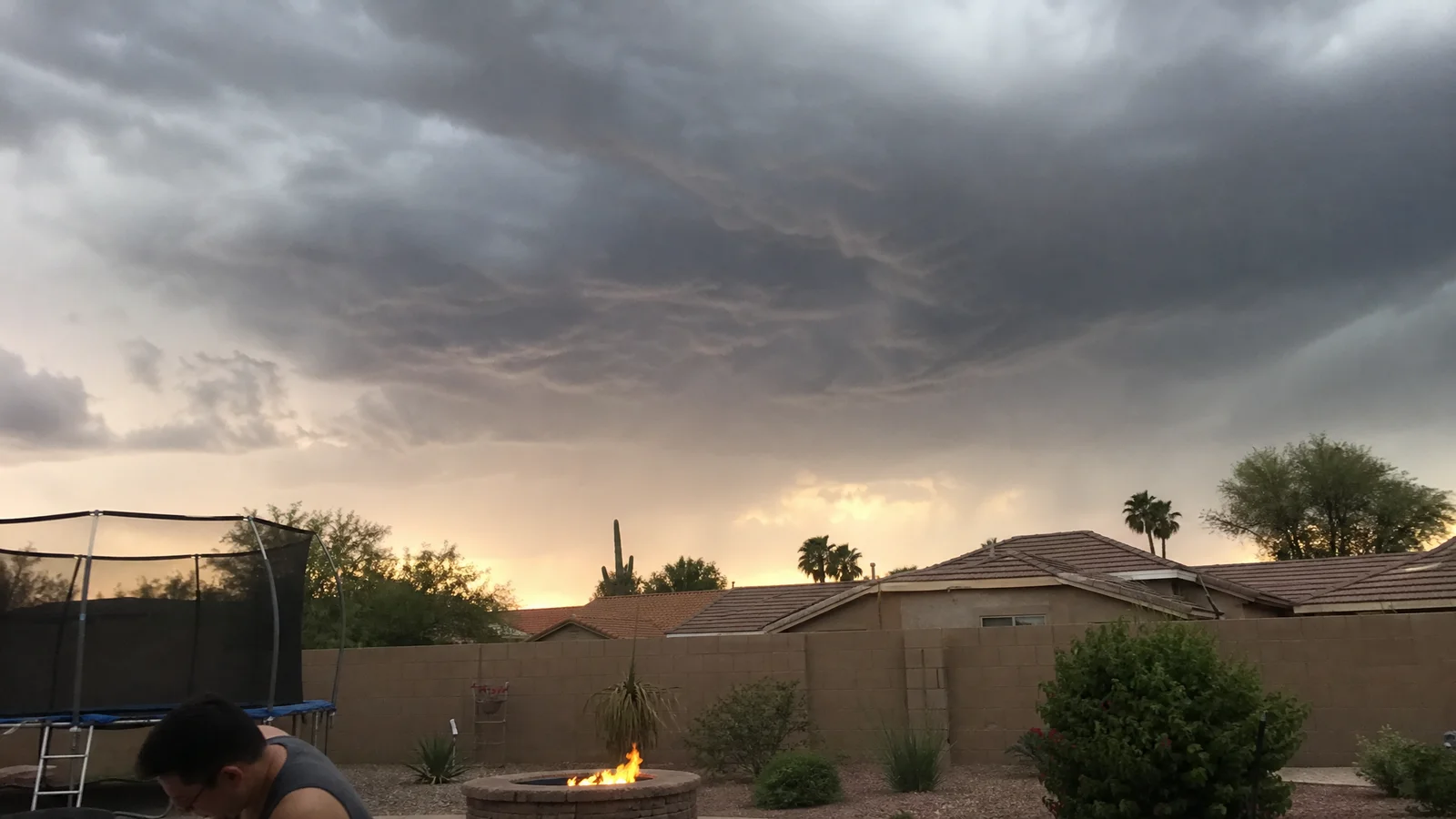
If you live in the Phoenix metro and you’ve been through a monsoon season with bark scorpions in the house, you already know the pattern. First storm rolls through in early July, drops the humidity, drops the barometric pressure — and within 48 hours the scorpions that were living in your block wall are looking for somewhere drier.
That somewhere drier is often the inside of your house.
We’re seeing the 2026 monsoon pressure ramp up already, and the calls are lining up exactly like every year: Paradise Valley first, then Ahwatukee, then the desert-edge lots along the McDowell foothills. Here’s what to do before the next storm.
Why monsoon = scorpions inside
The Arizona bark scorpion (Centruroides sculpturatus) spends its dry-season days tucked into block walls, under bark, and inside garages — anywhere dark and stable. When a monsoon hits, three things change:
- Block-wall cavities flood or fill with runoff, forcing scorpions out
- Humidity spikes and cools the ground surface, making night hunting easier
- Prey activity surges — crickets, cockroaches, other insects come out with the rain
Result: scorpions move. They travel further at night, they look for new harborage, and any home with weep holes, gaps under garage doors, or a bad door sweep becomes a candidate. Bark scorpions can squeeze through gaps as narrow as 1/16 of an inch. Almost every Phoenix home has gaps that size somewhere.
What we’re seeing across the Valley this summer
Through late June we’ve already logged a higher-than-average number of Paradise Valley and North Scottsdale calls. Two patterns stand out:
Homes near washes and desert edges are seeing early activity. If your block wall backs onto open desert (McDowell foothills, north Camelback, the desert-preserve edges around Cave Creek), the scorpions are already there — they just haven’t come inside yet.
Homes on 20+ year old builds are seeing more activity than newer stucco. Older weep holes are wider, older door sweeps are worn, and slab expansion joints have opened up with time. Sealing these before the July surge is the highest-leverage move a homeowner can make.
The pre-monsoon protection plan
If you’re reading this before mid-July, you have time. Here’s the order of operations we recommend to Valley homeowners:
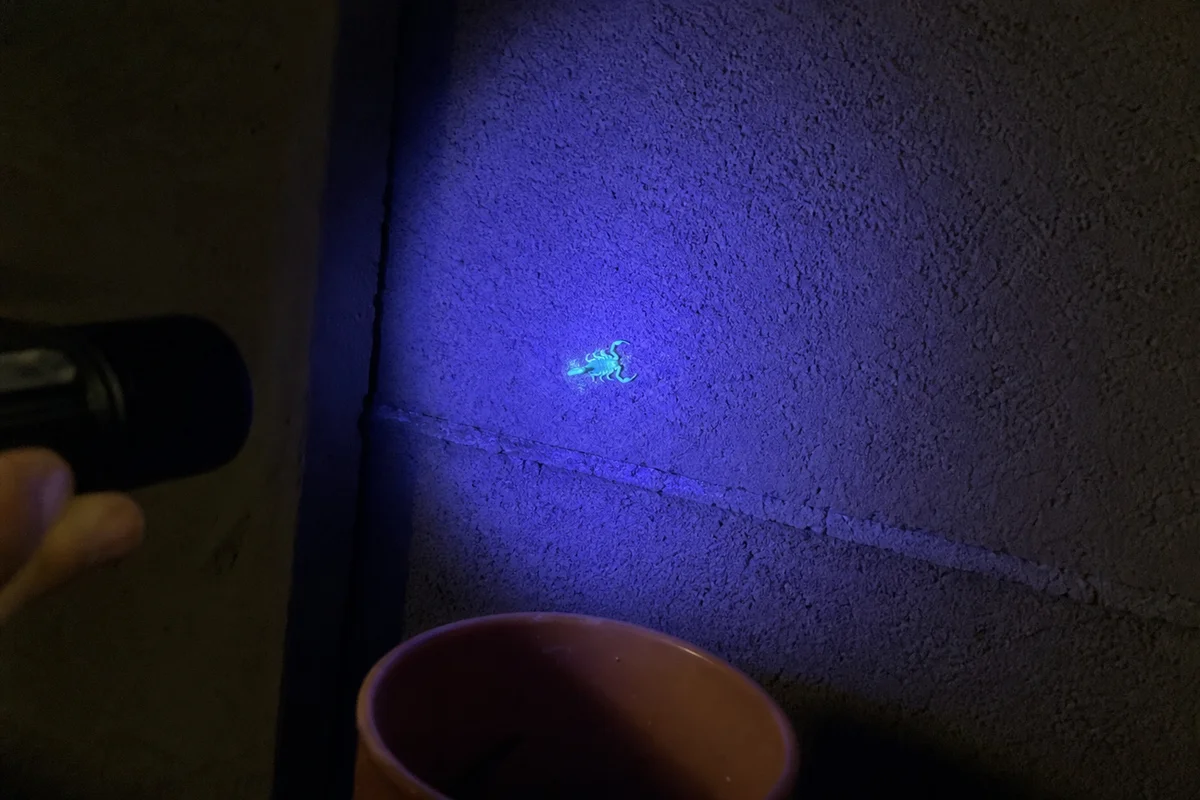
1. UV inspection at dusk. Grab a UV black light (the same handheld ones we use — cheap on Amazon) and walk your yard 30 minutes after sunset. Bark scorpions glow bright green under UV. Note where they are — block walls, under landscaping rocks, near woodpiles. That’s your harborage map.
2. Seal weep holes. Every weep hole in your stucco (the small horizontal gaps at the base of exterior walls that let rainwater drain) is a scorpion doorway. Copper mesh or dedicated weep-hole covers close them off without blocking drainage. This is the single most impactful seal you can do.
3. Check door sweeps. Walk around the house and get low. If you can see daylight under any door — garage, side entry, back patio — that’s an entry point. Rubber sweeps are cheap and take 10 minutes to install per door.
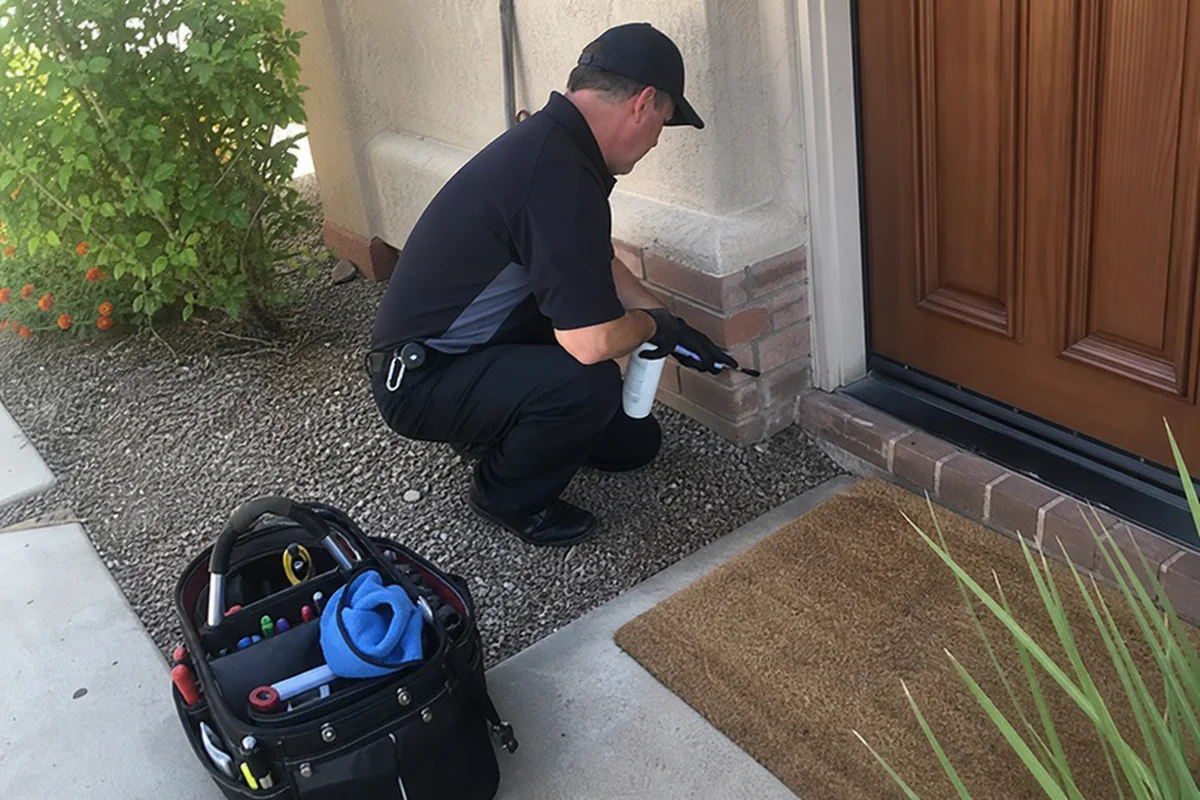
4. Address block-wall harborage. Wall cavities are where bark scorpions live during the day. A professional barrier treatment plus wall flushing (forcing them out with a targeted spray) shifts the population off your property before they migrate inside. This is the piece a DIY approach can’t really match.
5. Trim landscaping away from the house. Anything touching the exterior wall — bougainvillea, oleanders, jasmine — is a scorpion highway from ground level up. Even 12 inches of clearance helps.
For the full breakdown of our approach, see the scorpion control page.
When to call for help
DIY sealing and yard maintenance take you a long way. Call a professional when:
- You see multiple scorpions inside within a week
- Your yard has heavy scorpion pressure on the UV walk (10+ scorpions visible)
- You’ve got kids or pets and want the added confidence of a barrier treatment
- Block-wall boundaries back onto open desert (McDowell foothills, Camelback, north-side preserves)
We’re running same-week appointments across the metro through the season. Book early — the two weeks after the first big monsoon storm are always the busiest, and slots fill.
The rest of the season
Once the rains start, expect a 4-6 week window of elevated indoor scorpion sightings across the Valley. If you’re on a monthly plan, you’re already covered by re-service between visits. If you’re on quarterly, this is the season we recommend a mid-cycle top-up — and if you’re deciding between the two, our guide on monthly vs quarterly pest control walks through which cadence fits desert-edge scorpion pressure.
If you’re not on a plan yet and want an inspection before the next storm, get in touch — we’ll walk the property, quote upfront, and get you sealed before the water hits.
Stay dry.
Tags