comparison
Monthly vs Quarterly Pest Control: Which Is Right?
Monthly or quarterly pest control in Phoenix? Compare cost, coverage, and pest pressure to pick the plan cadence that fits your home.
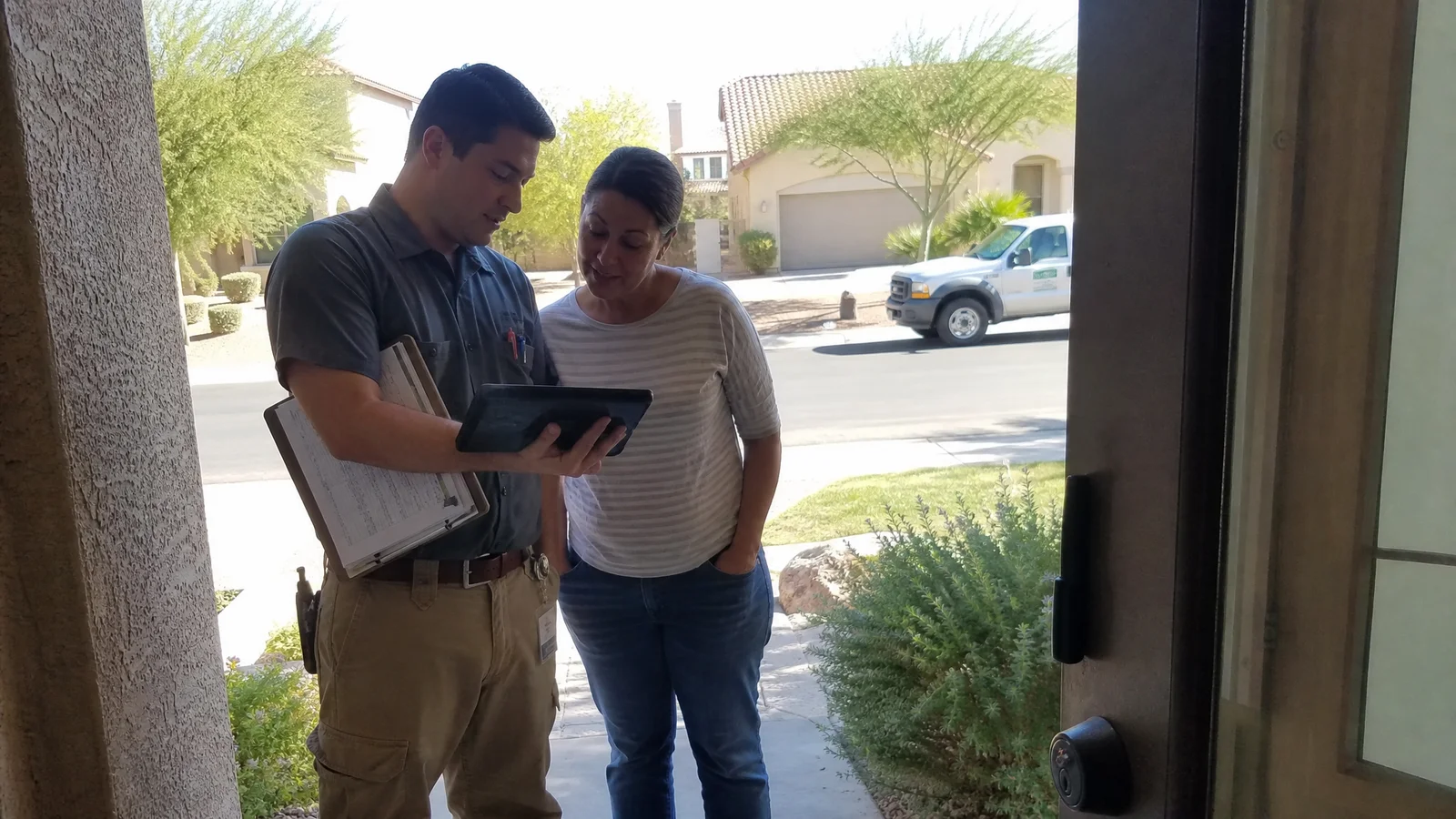
We hear questions about monthly vs quarterly pest control daily after finishing an initial property inspection. The choice between these two service frequencies really dictates how your home stands up to seasonal threats.
Recent 2026 data from the National Pest Management Association highlights that rodents alone invade 21 million US homes annually. Our experience shows that keeping those numbers at zero requires matching your treatment plan to your specific environment.
Let’s look at the data, what it’s actually telling us, and explore how to decide on the best schedule.
The quick decision framework for monthly vs quarterly pest control
Our straightforward advice is to use monthly service for active infestations and quarterly service for standard prevention. This approach prevents you from overpaying while ensuring your home stays completely protected.
Many homeowners do not realize that common synthetic pyrethroid treatments, like bifenthrin, break down quickly in direct sunlight. We routinely see exterior barriers degrade in just 30 to 60 days under harsh UV exposure. This rapid breakdown makes more frequent applications critical for high-risk properties.
Here is a breakdown to help you choose the right path.
Choose monthly if:
- You have active bark-scorpion issues in your yard.
- Your property backs onto open desert or a wash.
- You have seen rodent activity in the last two years.
- You are battling fast-breeding pests. (German cockroaches reach breeding maturity in just 36 days.)
- Your older home has wider weep holes and foundational gaps.
Choose quarterly if:
- You are doing prevention instead of solving an active emergency.
- Your suburban property faces standard, mid-tier pest pressure.
- You want to keep your annual maintenance costs lower.
- You feel comfortable calling for an occasional re-service.
Choose a one-time treatment if:
- You need a single problem handled quickly.
- You are prepping a property for a fast real estate sale.
- You simply cannot commit to an ongoing contract yet.
Cost comparison
We tell customers that US monthly plans average $40 to $70 per visit, while quarterly plans run $100 to $175 per visit. According to 2026 market data from Angi, a standard one-time treatment runs between $150 and $260.
Those single visits offer no ongoing warranty or follow-up monitoring. Our pricing structure aligns with national averages to give you predictable, transparent expenses. You will always pay more per year for a monthly schedule, but each visit requires less aggressive chemical use.
Let’s break down the typical US cost averages for 2026.
| Plan Type | Estimated Cost Per Visit | Total Annual Cost | Best Used For |
|---|---|---|---|
| Monthly | $40 to $70 | $480 to $840 | Active infestations, fast breeders, high sun exposure |
| Quarterly | $100 to $175 | $400 to $700 | General prevention, standard suburban homes |
| One-Time | $150 to $260 | $150 to $260 | Real estate prep, isolated incidents |
Our quarterly plans provide the best financial balance for the average suburban homeowner. You save money over the year while still securing free re-services between scheduled stops.
Coverage differences
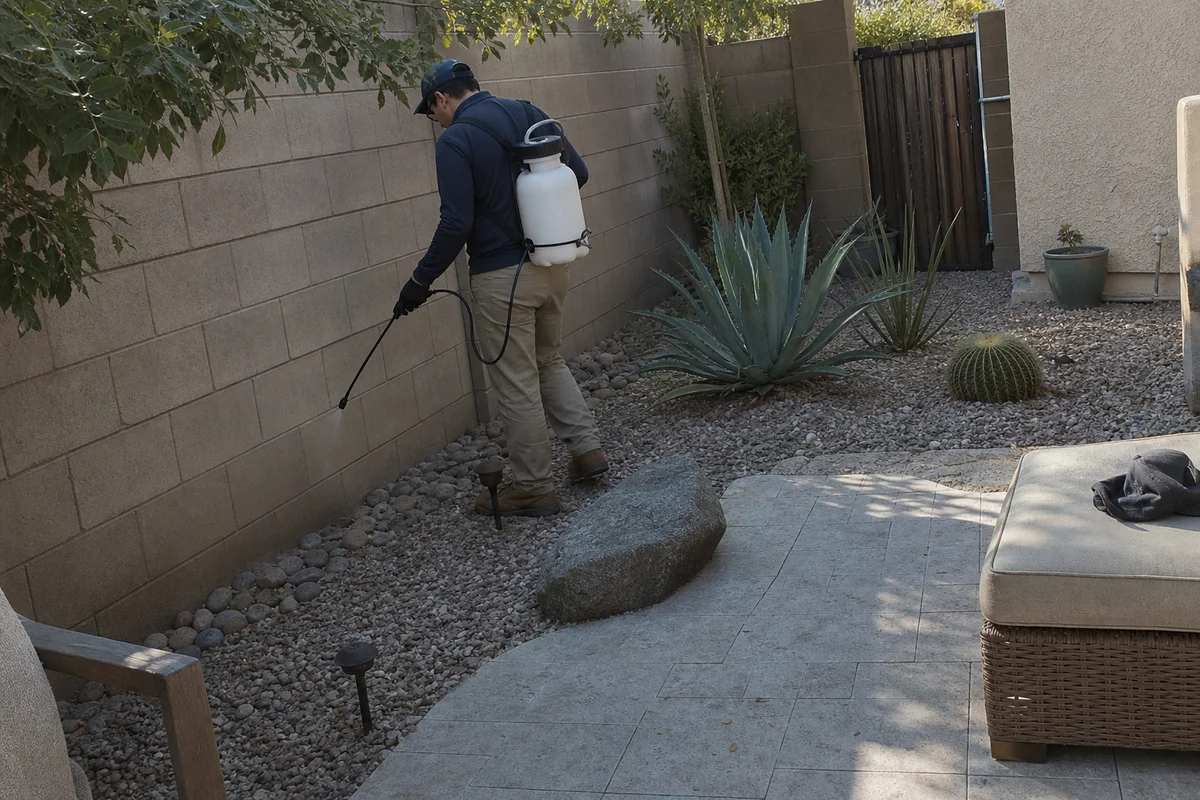
Our monthly treatments provide highly targeted interior monitoring and rapid responses to seasonal surges. Quarterly coverage still maintains a solid perimeter but leaves a longer gap between professional inspections. The biggest difference comes down to managing insect life cycles.
We rely heavily on Insect Growth Regulators, known as IGRs, during monthly interior services. Products like pyriproxyfen stop juvenile pests from reaching sexual maturity. This interruption is absolutely vital for stopping fast breeders like German roaches and fleas.
Here is what monthly service gets you that quarterly does not:
- Faster response to monsoon scorpions and winter rodents.
- Tighter monitoring of bait stations and traps.
- Frequent replenishment of exterior barriers that degrade in sunlight.
- Better containment for high-pressure properties.
Here is what quarterly service gets you that a one-time visit misses:
- Free return service if pests break through the barrier.
- Strategically timed visits around peak breeding windows.
- Ongoing monitoring of known entry points.
Both plans include a thorough exterior perimeter barrier and interior spot treatments where activity is visible. We always adapt the exact application to your home’s unique layout.
When to start monthly, then step down
We frequently recommend starting with an aggressive monthly plan to crush an active infestation before dropping to a maintenance schedule. This strategy works perfectly for established roach issues or rodents nesting in the attic.
You should keep up the high-frequency visits for three to six months until the property completely stabilizes. Our technicians will honestly tell you when it makes sense to step down to a cheaper quarterly plan.
Pro Tip: Downgrading too early is a common mistake that lets surviving pests rebound. Industry experts advise waiting until you have experienced 60 solid days of zero pest sightings before reducing your service frequency.
Similarly, homes dealing with heavy scorpion pressure often stay on a monthly schedule through the active April to October season. We transition these same properties to a quarterly cadence once the winter chill sets in. This seasonal adjustment saves you money while keeping the barrier strong during peak threat months.
What quarterly does NOT cover
Our standard quarterly plans focus entirely on preventing general household pests like ants, spiders, and basic roaches — if you’re unsure of the exact scope, see what a general pest control service covers. They do not cover massive structural threats or highly specialized removal tasks.
A catch-all policy simply does not exist in professional pest management. We want to be completely transparent about what requires a specialized add-on service. Targeted treatments require entirely different equipment and state licenses.
Standard quarterly plans typically exclude:
- Termite inspection and treatment: The national average for termite remediation in 2026 is around $2,500.
- Rodent trapping and exclusion: Installing copper mesh and structural seals is a separate construction-style service.
- Attic remediation: Removing contaminated insulation requires specialized hazard gear.
- High-level bee or wasp removal: Eradicating nests near rooflines requires ladders and distinct safety protocols.
We will always provide a clear, separate quote if we spot these specific dangers during a routine visit. You will never be surprised by a sudden upcharge on your regular invoice.
The honest recommendation
Our most successful clients typically combine an aggressive initial cleanout with a consistent pest control plan frequency that matches their environment. This formula clears out the existing bugs and builds a lasting wall against new invaders. Most standard homes are perfectly served by this straightforward approach.
- Initial treatment: A heavy application to clear out active, breeding pests.
- Quarterly plan: Ongoing, cost-effective prevention with free callbacks.
- Dedicated add-ons: Specific services for termites or severe scorpion threats when pressure demands it.
We highly encourage upgrading to a monthly schedule if you live on the edge of a desert or have a low tolerance for bugs indoors. Properties with young children or pets also benefit greatly from the tighter monitoring of a monthly schedule. You deserve total peace of mind inside your own house.
Ready to pick one?
Our team is ready to walk your property, identify your specific pest pressures, and give you an honest recommendation on monthly vs quarterly pest control. There is never any pressure to buy a frequency you do not actually need.
We want to help you protect your investment the right way. Start a prevention plan today, and our office will get you on the schedule before the week ends.
FAQ
Is monthly pest control worth the extra cost?
For homes with heavy scorpion or rodent pressure — usually desert-edge or older properties — yes. The extra visits keep new pests from establishing between treatments. For lower-pressure suburban homes, quarterly is typically enough.
Can I switch from monthly to quarterly?
Yes — this is common. Many homeowners start monthly to get pest pressure under control, then step down to quarterly once the property is stabilized. We'll recommend the switch when it makes sense.
Does quarterly cover monsoon and winter pest seasons?
We time quarterly visits around Phoenix's peak pest windows — pre-monsoon (June), post-monsoon (September), and pre-winter (November). Between-visit re-service is included if a covered pest comes back.
Ready to talk to us?
Get an upfront quote this week.
Same-week appointments across the Phoenix metro. No obligation, no pressure — just an inspection and a straight quote.
Get a Free Quote